
How to Clean Your Dishwasher Filter

If your dishes are coming out of the dishwasher with food particles still stuck on them, or you’ve noticed an unpleasant odor every time you open the door, the culprit is likely a dirty dishwasher filter. Cleaning your dishwasher filter is one of the simplest yet most overlooked maintenance tasks that can dramatically improve your appliance’s performance.
In this guide, we’ll walk you through everything you need to know about cleaning your dishwasher filter, including why it matters, how often to do it, and step-by-step instructions to get the job done right.
What Is a Dishwasher Filter and Why Does It Matter?
The dishwasher filter is designed to trap food particles, debris, and other residue during the wash cycle. This prevents these particles from recirculating onto your clean dishes or clogging the drain pump. There are two main types of dishwasher filters:
- Manual filters: These require regular cleaning by the user and are found in most modern dishwashers. They’re quieter during operation but need more maintenance.
- Self-cleaning filters: These use a built-in grinder to pulverize food particles, which are then flushed down the drain. They’re more common in older models and require less maintenance but can be noisier.
Most dishwashers manufactured after 2010 have manual filters, which means regular cleaning is essential for optimal performance.
Signs Your Dishwasher Filter Needs Cleaning
Not sure if your filter needs attention? Here are some telltale signs:
- Dishes aren’t getting clean: Food particles remaining on dishes after a cycle often indicate a clogged filter.
- Unpleasant odors: A dirty filter can harbor bacteria and mold, causing foul smells.
- Visible debris: If you can see food particles or grime on the filter, it’s time for a cleaning.
- Water pooling at the bottom: A clogged filter can prevent proper drainage.
- Longer cycle times: Your dishwasher may run longer cycles trying to compensate for reduced water flow.
How Often Should You Clean Your Dishwasher Filter?
The frequency of cleaning depends on how often you use your dishwasher and your pre-rinsing habits:
- Heavy use (daily): Clean the filter once a week or every two weeks.
- Moderate use (3-4 times per week): Clean the filter once a month.
- Light use (1-2 times per week): Clean the filter every one to two months.
If you don’t pre-rinse your dishes before loading them, you may need to clean the filter more frequently. Establishing a regular cleaning schedule will help maintain your dishwasher’s efficiency and prevent buildup.
Step-by-Step Guide to Cleaning Your Dishwasher Filter
Follow these steps to thoroughly clean your dishwasher filter:
Step 1: Locate the Filter
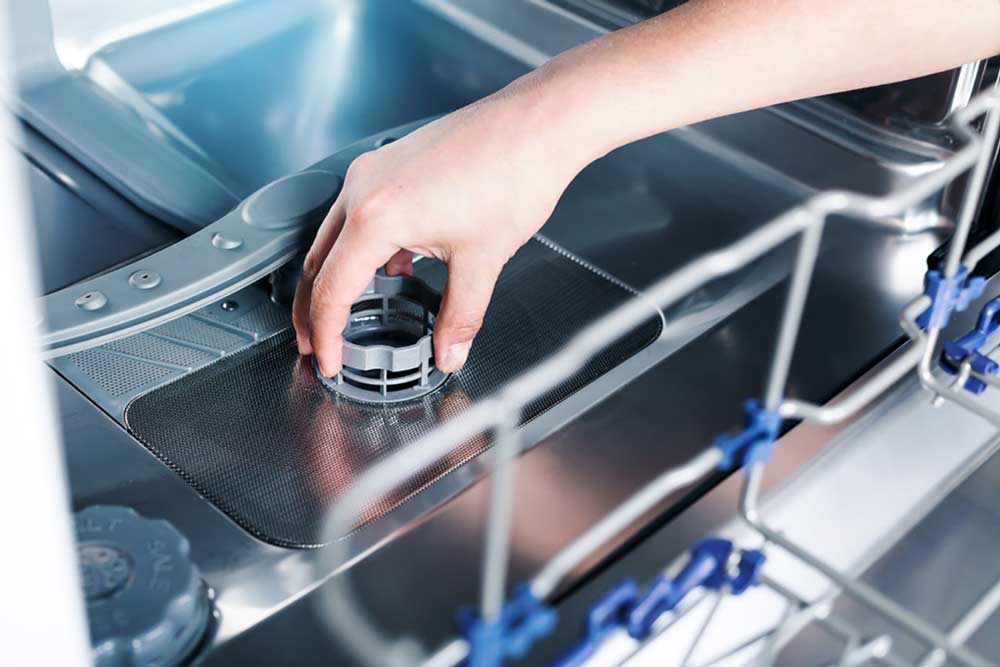
The dishwasher filter is typically located at the bottom of the dishwasher tub, beneath the lower spray arm. It usually consists of two parts: an upper filter (cylindrical) and a lower filter (flat mesh screen). Consult your owner’s manual if you’re having trouble finding it.
Step 2: Remove the Filter
Most filters can be removed by twisting the cylindrical upper filter counterclockwise and lifting it out. The lower filter usually lifts out separately. Some models may have a locking mechanism – check your manual for specific instructions.
Step 3: Rinse Under Running Water
Hold the filter under warm running water to remove loose debris. Use your fingers to gently dislodge any food particles stuck in the mesh.
Step 4: Scrub with a Soft Brush
For stubborn residue, use a soft-bristled brush (an old toothbrush works great) to gently scrub the filter. Avoid using wire brushes or abrasive scrubbers, as these can damage the fine mesh.
Step 5: Soak if Necessary
If the filter is heavily soiled, soak it in warm, soapy water for 10-15 minutes. You can also add a cup of white vinegar to help break down grease and mineral deposits. For tough buildup, create a paste with baking soda and water, apply it to the filter, and let it sit for a few minutes before scrubbing.
Step 6: Rinse and Inspect
Rinse the filter thoroughly to remove all soap residue. Hold it up to the light to check for any remaining debris or damage. If you notice cracks or holes in the mesh, it’s time to replace the filter.
Step 7: Clean the Filter Housing
While the filter is out, take a moment to wipe down the filter housing area at the bottom of the dishwasher. Use a damp cloth or sponge to remove any debris or buildup around the drain.
Step 8: Reinstall the Filter
Place the lower filter back into position, then insert the upper filter and twist clockwise to lock it in place. Make sure the filter is seated properly – an improperly installed filter can allow debris to bypass it and clog the drain pump.
Tips for Keeping Your Dishwasher Filter Clean Longer
Prevention is key to reducing how often you need to deep clean your filter:
- Scrape dishes before loading: Remove large food particles from plates before placing them in the dishwasher. You don’t need to pre-rinse, but scraping helps.
- Run hot water before starting a cycle: Run your kitchen faucet until the water is hot before starting the dishwasher. This helps dissolve grease and food particles more effectively.
- Use quality detergent: A good dishwasher detergent helps break down food particles and prevents buildup.
- Run a monthly cleaning cycle: Once a month, run an empty dishwasher with a cup of white vinegar or a dishwasher cleaner to remove grease and mineral deposits.
- Don’t overload the dishwasher: Proper loading allows water to circulate freely and clean dishes more effectively.
What Happens If You Don’t Clean Your Dishwasher Filter?
Neglecting your dishwasher filter can lead to several problems:
- Poor cleaning performance: Dirty water recirculates onto your dishes, leaving them grimy.
- Foul odors: Trapped food particles decompose and create unpleasant smells.
- Drain clogs: Debris can eventually make its way to the drain pump, causing blockages.
- Increased energy consumption: A clogged filter forces the dishwasher to work harder, using more water and electricity.
- Shortened appliance lifespan: Strain on the pump and other components can lead to premature wear and costly repairs.
When to Replace Your Dishwasher Filter
Even with regular cleaning, dishwasher filters don’t last forever. Consider replacing your filter if you notice:
- Cracks, holes, or tears in the mesh
- Warping or deformation
- Persistent odors even after thorough cleaning
- Continued poor performance despite regular maintenance
Replacement filters are available from appliance parts retailers and typically cost between $15 and $50, depending on your dishwasher model.
When to Call a Professional
While cleaning the dishwasher filter is a simple DIY task, some situations call for professional dishwasher repair:
- Persistent drainage issues: If your dishwasher still isn’t draining properly after cleaning the filter, there may be a clog deeper in the system.
- Unusual noises: Grinding or humming sounds could indicate a problem with the drain pump.
- Error codes: If your dishwasher displays error codes related to drainage or water flow, a technician can diagnose the issue.
- Leaks: Water leaking from your dishwasher may indicate a more serious problem that requires professional attention.
Keep Your Dishwasher Running Smoothly
Cleaning your dishwasher filter is a quick and easy maintenance task that pays big dividends in appliance performance and longevity. By making it part of your regular cleaning routine, you’ll enjoy sparkling clean dishes, eliminate odors, and extend the life of your dishwasher.
If you’re experiencing persistent issues with your dishwasher despite regular maintenance, the experts at Atlanta Appliance Services are here to help. Our experienced technicians can diagnose and repair any dishwasher problem, from clogged drains to faulty pumps.
Contact us today to schedule your dishwasher repair and get your appliance back to peak performance!